







Designing a Bespoke Kitchen with Laila Rietbergen
Root kitchen
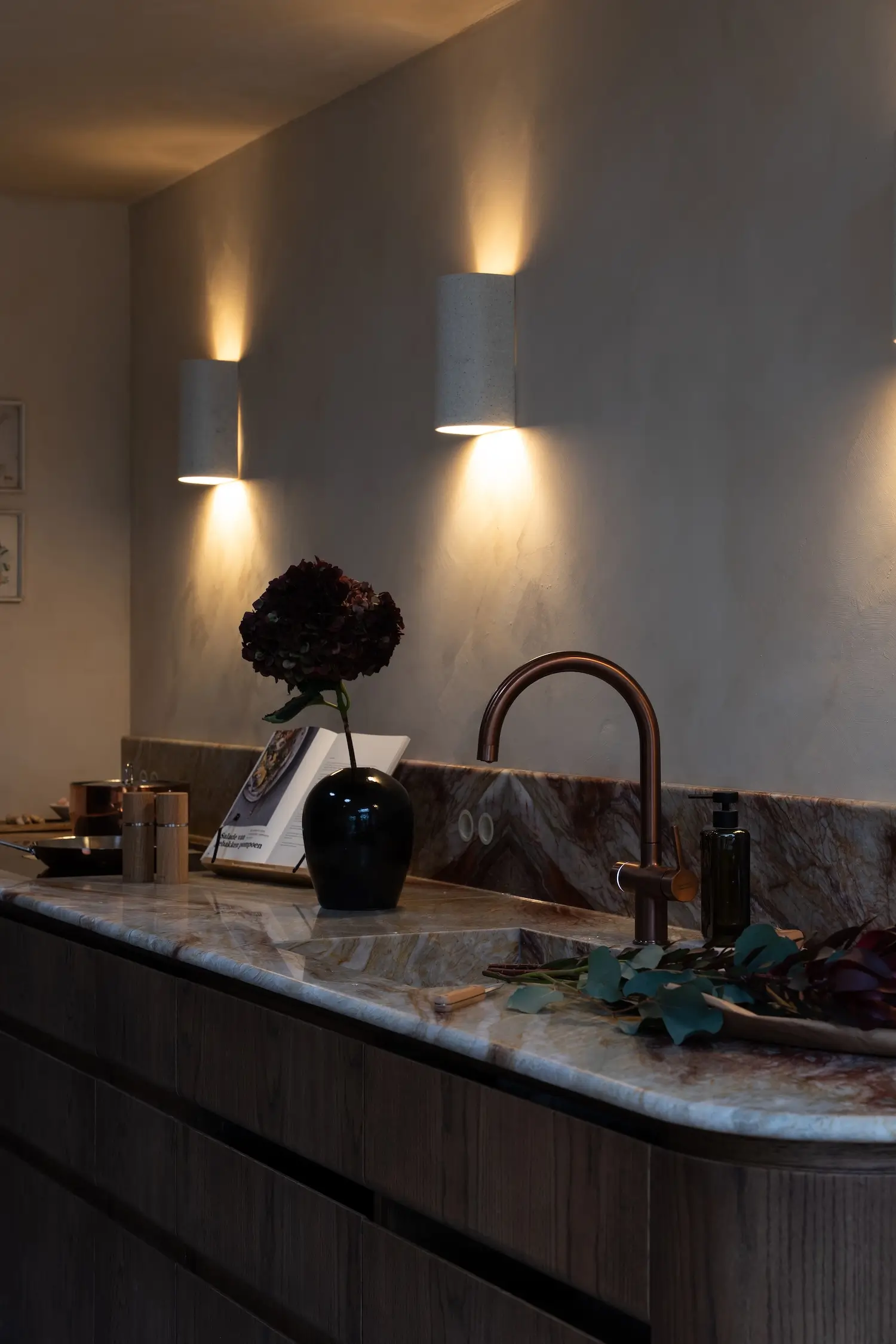
A bespoke kitchen does not begin with cabinetry drawings. It begins with intention. In conversation with Laila Rietbergen, founder of @japandi.interior, we explore how her Japandi philosophy shapes a bespoke kitchen that feels calm, personal, and deeply connected to daily life. For Laila, interior style is never just visual — it is relational. As she beautifully describes, “you can compare an interior style as a relationship, it has to complement you and you can be the best version of yourself.”
A Bespoke Kitchen Begins with Feeling
For Laila, intuition comes first. “Intuition drives originality, curiosity, and energy,” she explains. Only afterwards does discipline give form to ideas. When designing a bespoke kitchen, she first considers atmosphere: how natural light enters the space, how the family moves through it, and what emotional tone the room should carry. Because the kitchen, in her words, “is definitely a social room, it’s the heart of our home.” It must therefore feel welcoming, not performative.
Japandi Philosophy in Kitchen Design
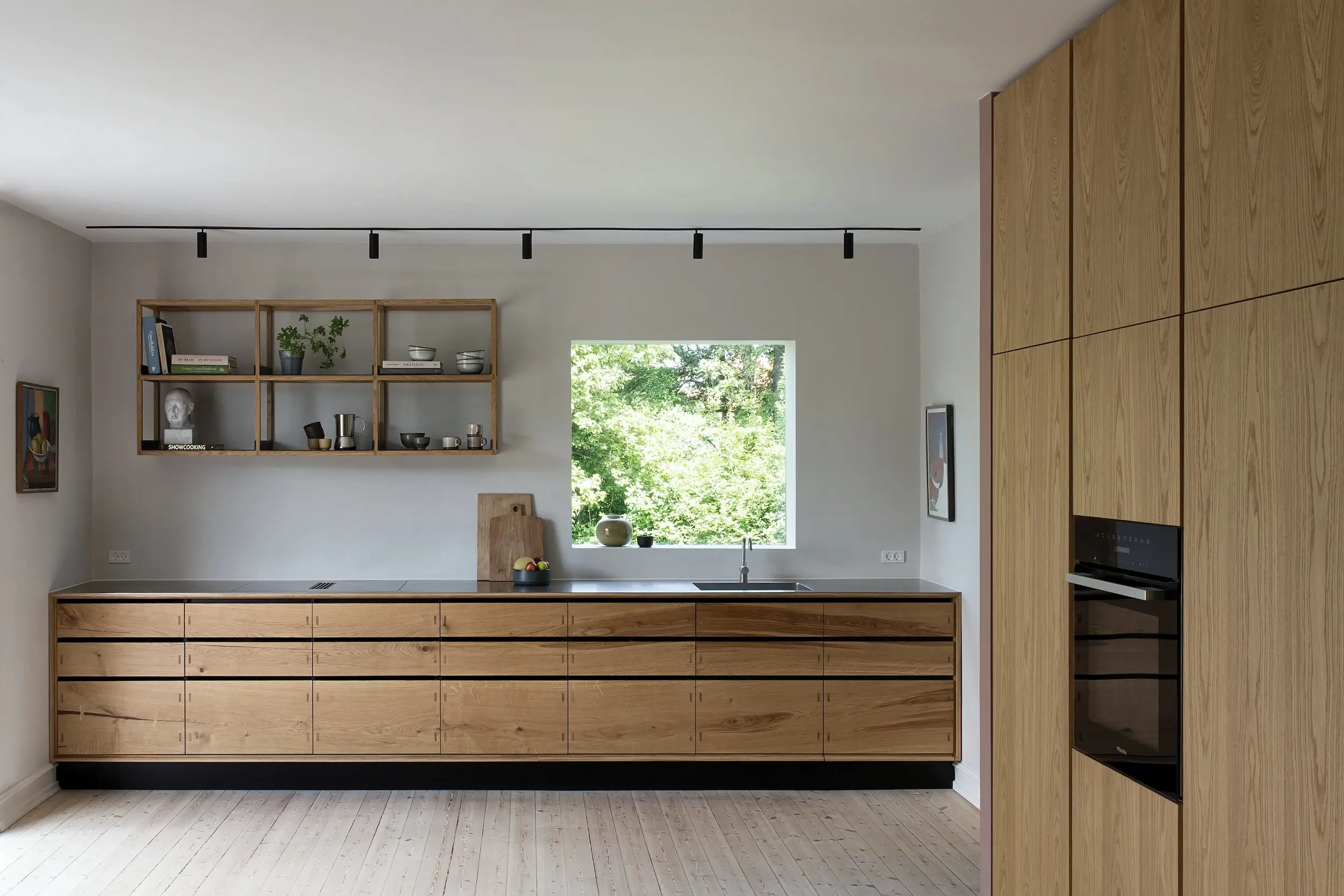
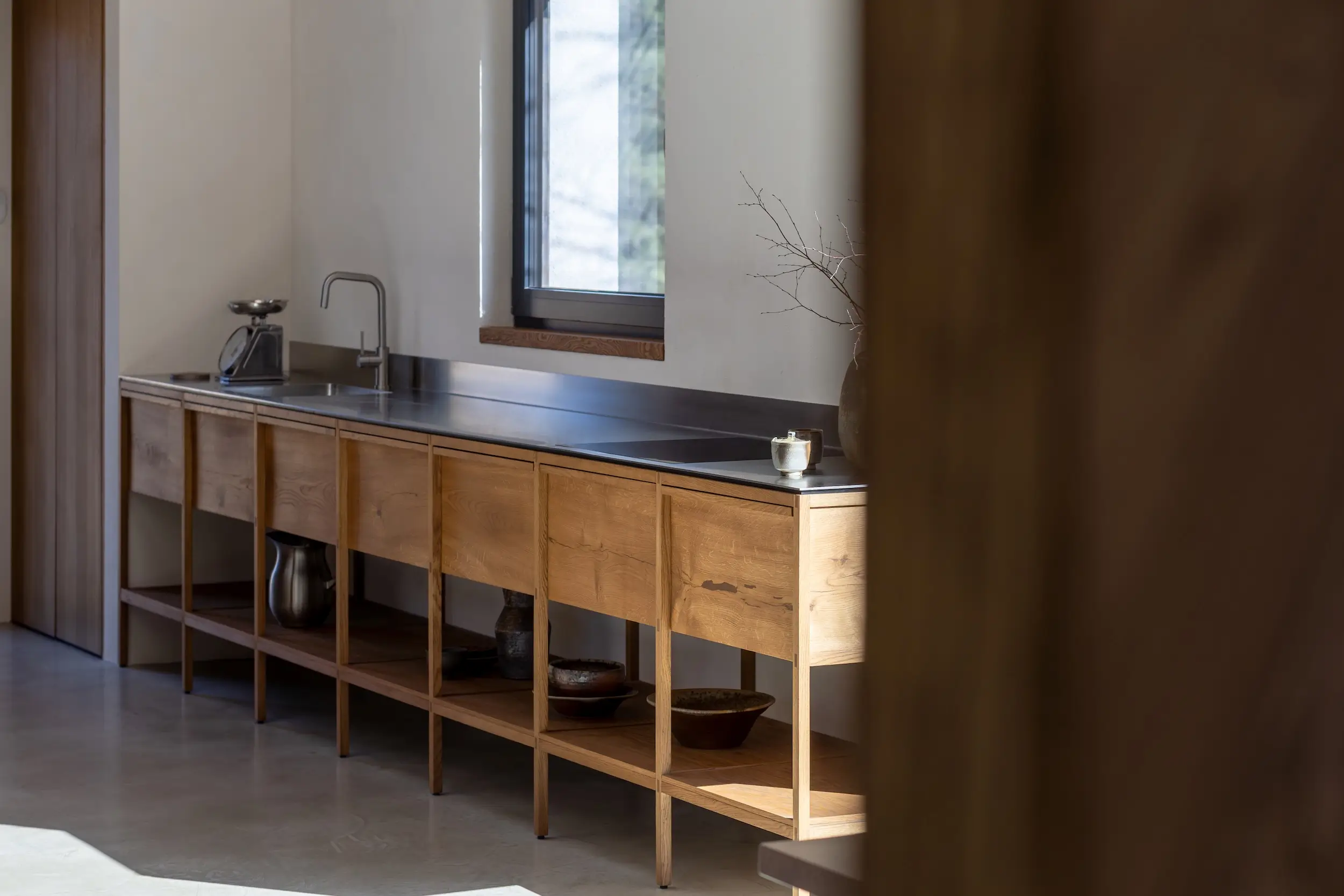
Japandi blends Japanese refinement with Scandinavian warmth. Laila describes it as more than colours or finishes — it is connected to philosophies like wabi-sabi and hygge. In a bespoke kitchen, this translates into natural materials, soft earthen tones, and craftsmanship-driven details. She loves to “play with shapes, lines and textures,” ensuring the space feels calm yet expressive. Where Japanese interiors are sleek and restrained, Scandinavian design adds warmth and light wood, creating a bespoke kitchen that feels both serene and grounded.
Craftsmanship and Soft Forms
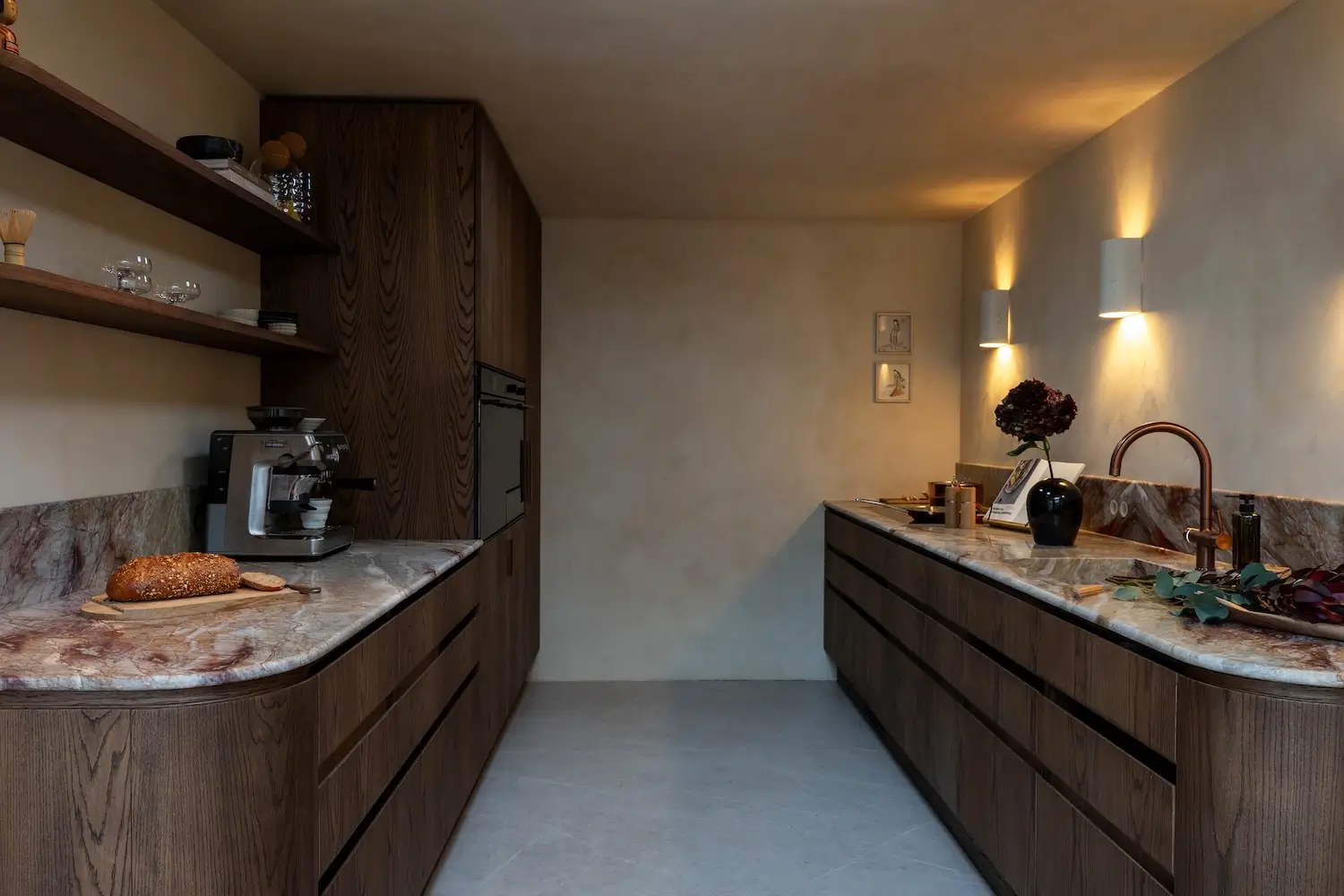
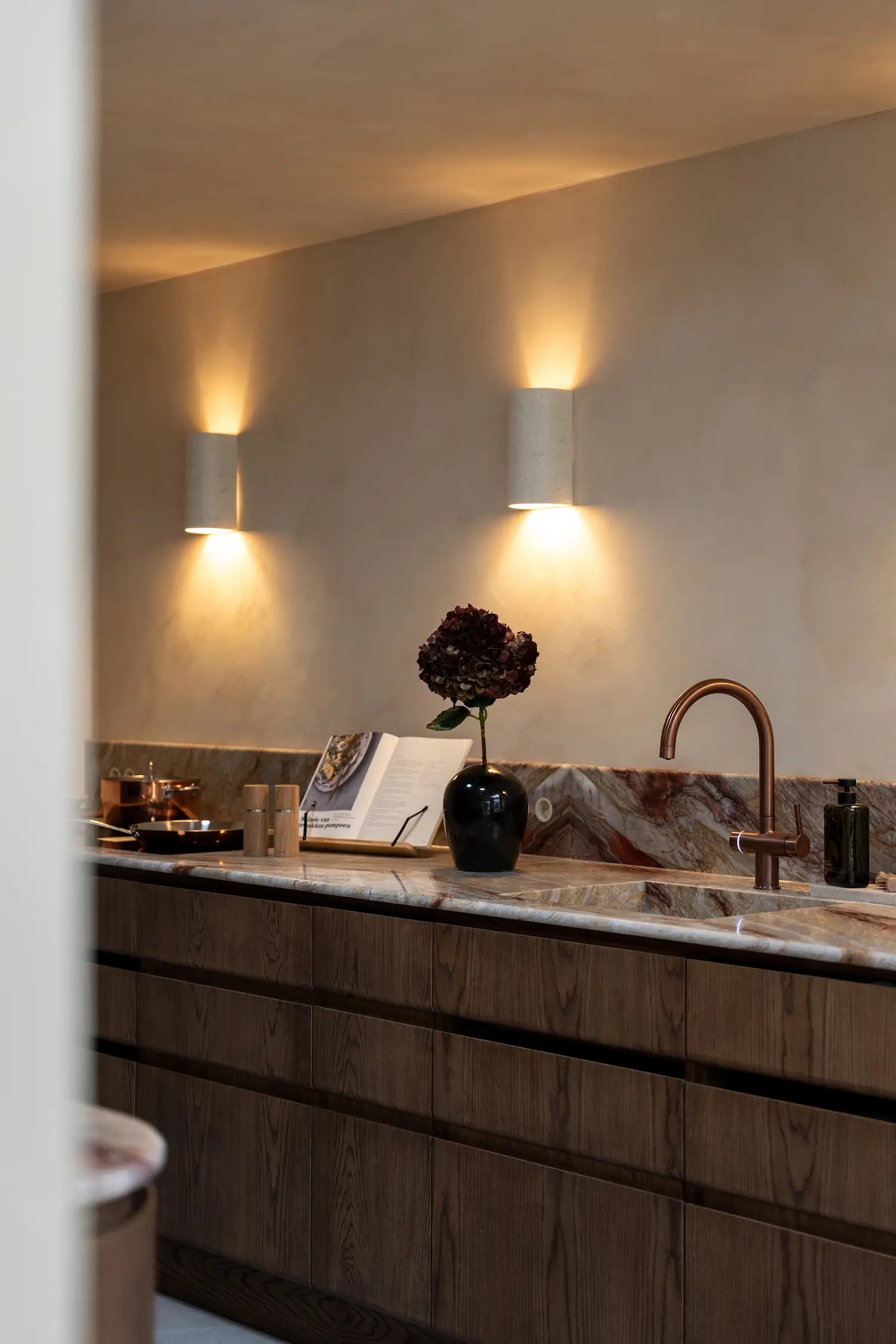
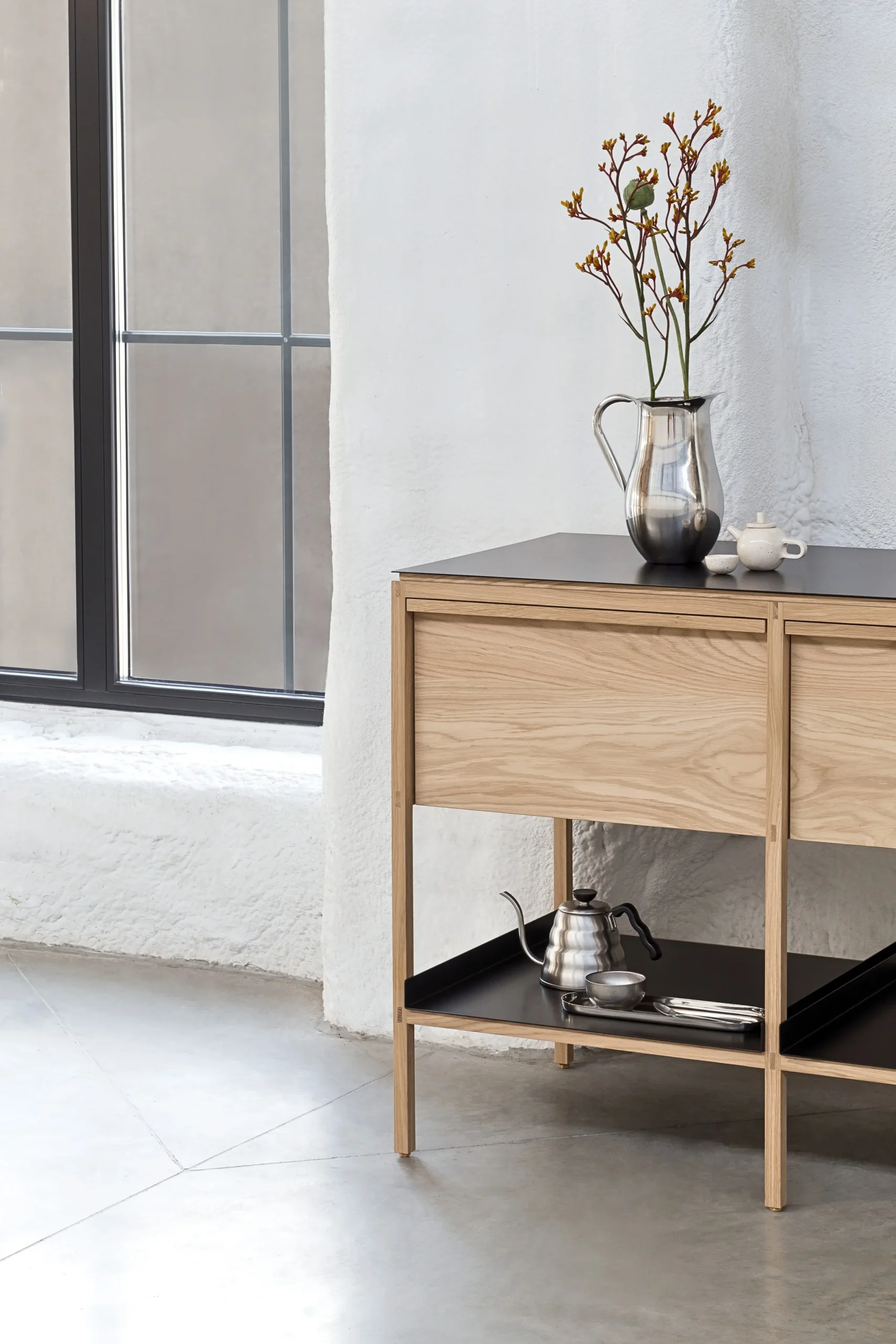
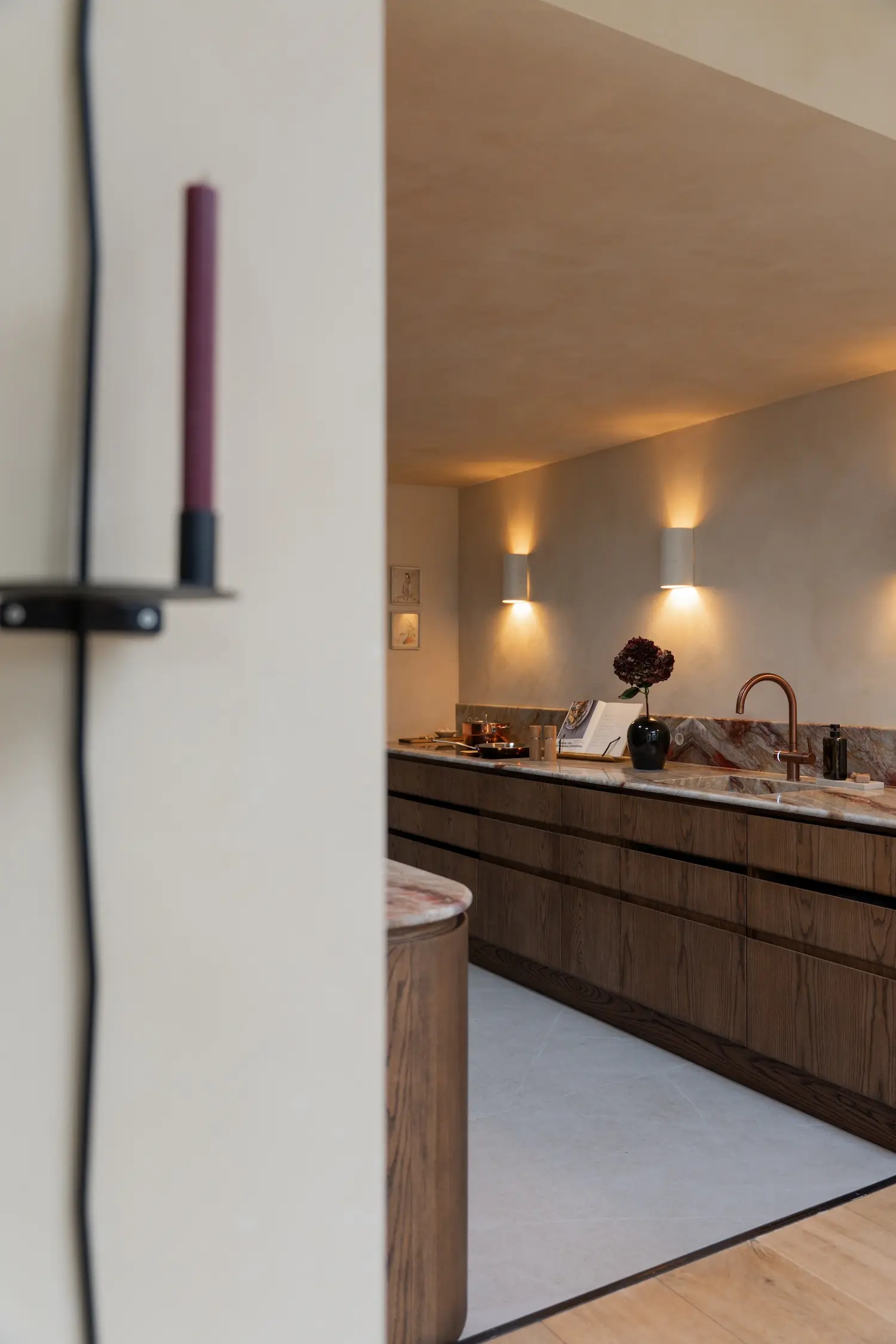
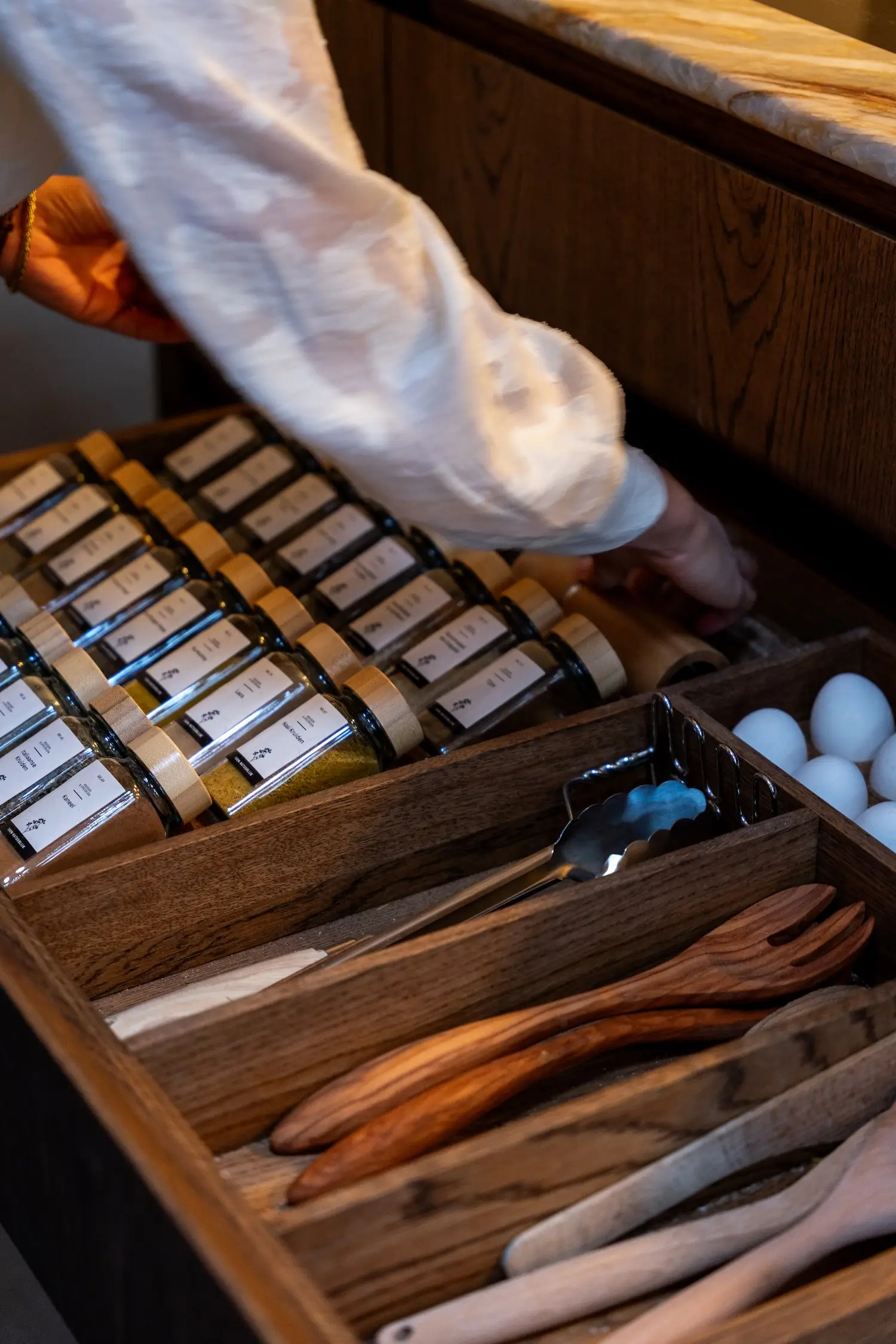
Detail defines a bespoke kitchen. In her own Roots kitchen, Laila wanted curves integrated into the entire design language — not “just a curved finish cabinet.” She highlights the soft half-round drawer finishes and even rounded ventilation grilles as examples of intentional craftsmanship. Quality, for her, is about longevity: “creating something that can last over years and years… the thought and intention behind the design.” A bespoke kitchen should age beautifully, gaining patina rather than losing value.
Functionality as Quiet Luxury
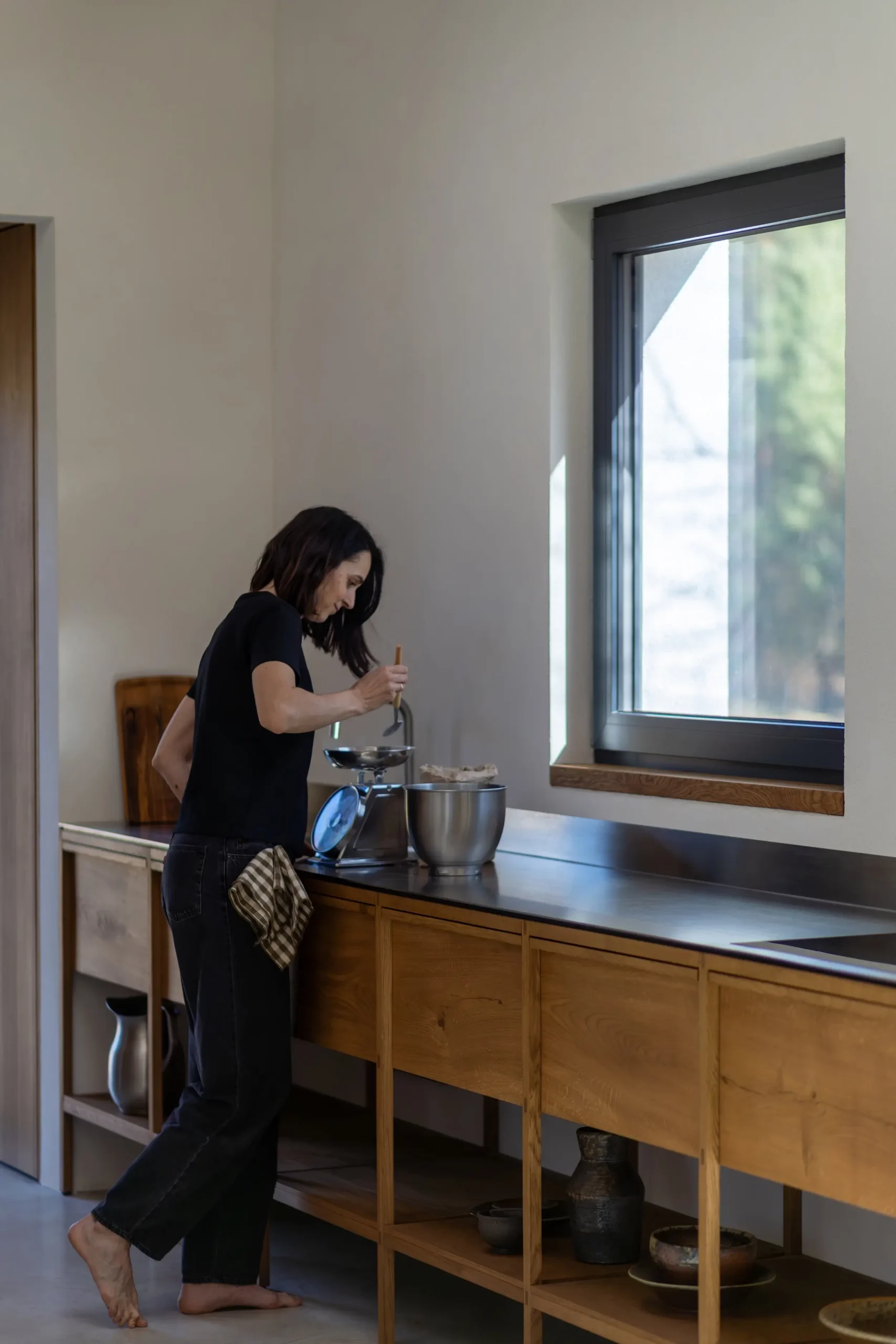
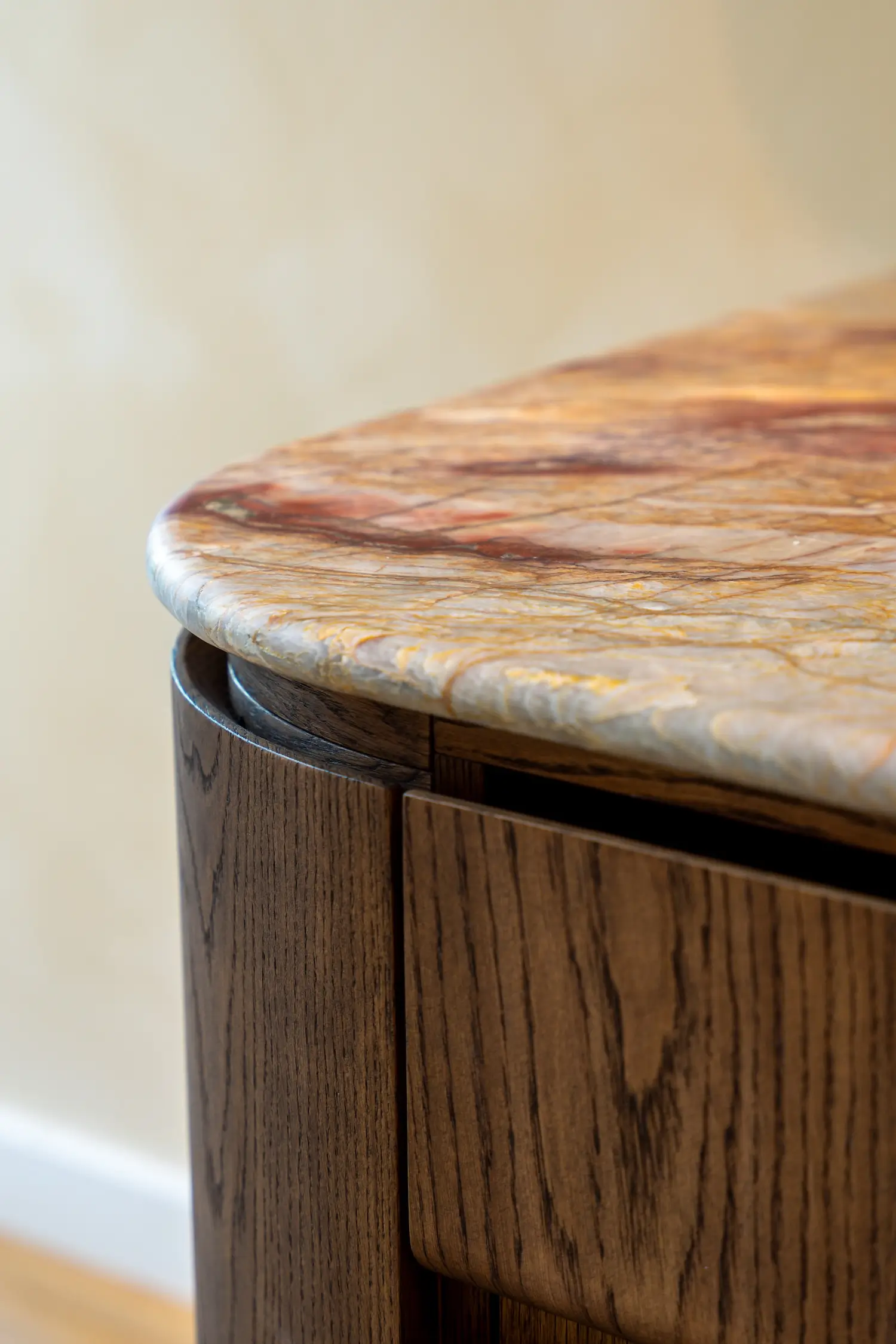
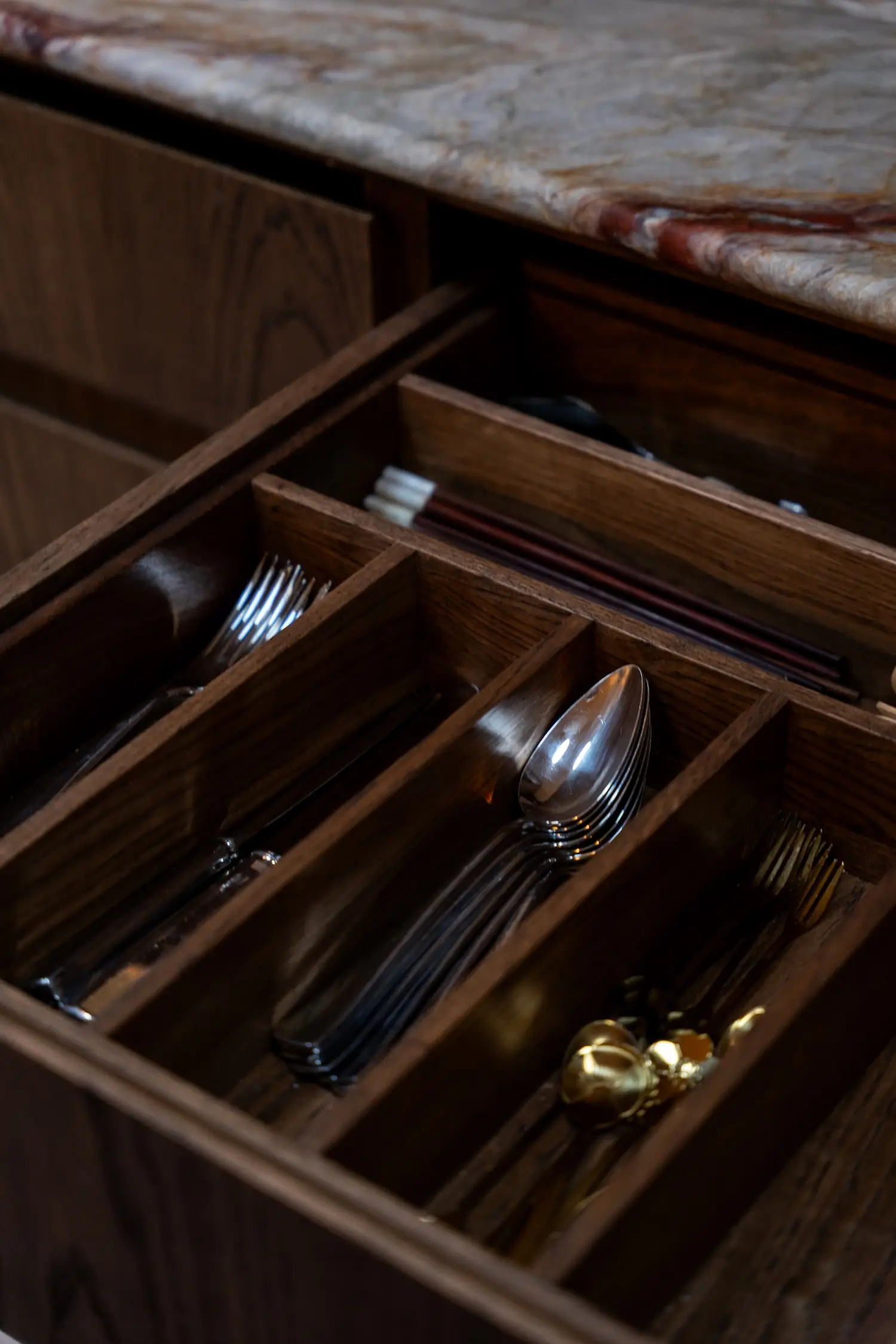
A bespoke kitchen must work effortlessly. Laila carefully considers the work triangle between fridge, sink, and cooker, kitchen traffic flow, and storage logic. She follows an 80–20 rule: “keep 80% off your stuff behind doors and 20% in sight.” For her, calm begins with enough storage — because clutter disrupts ease. When functionality and beauty coexist naturally, the bespoke kitchen becomes intuitive rather than overwhelming.
Imperfection and Evolution
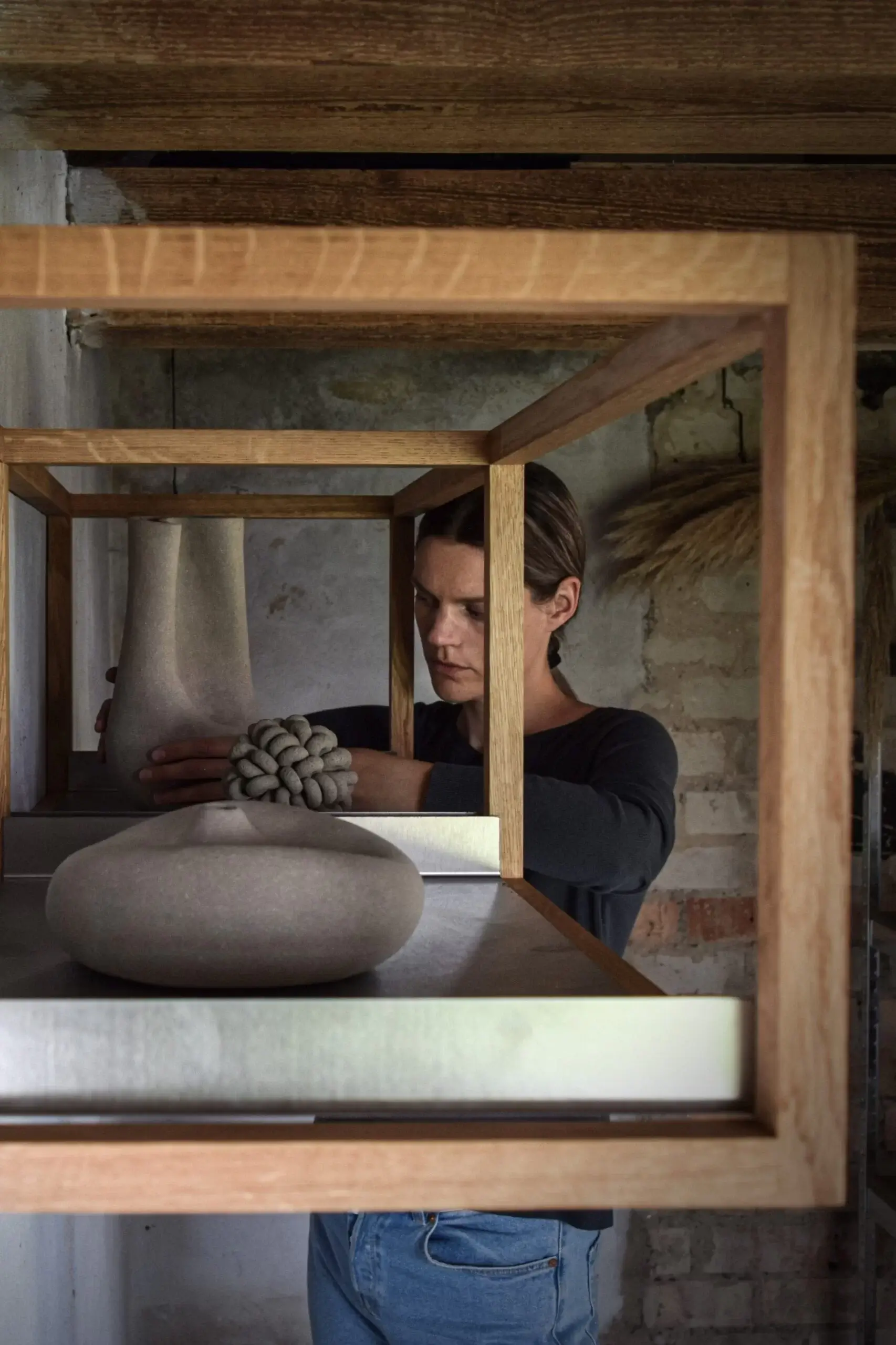
Imperfection is essential to a bespoke kitchen. Laila embraces the philosophy of wabi-sabi, where scratches, patina, and uneven surfaces tell a story. “Perfection can feel distant or staged, while imperfection makes a space feel honest, personal and deeply calming.” A bespoke kitchen is never truly finished — it evolves as life changes. It gathers art, meaningful objects, and everyday rituals, slowly becoming the quiet centre of the home.